
You have selected a contractor, finalized your home improvement plans, and are ready to begin construction. But before work can start, your building permit application gets delayed because of missing documents, unclear site measurements, or additional comments from the local building department. For homeowners, these delays can disrupt construction schedules, increase project costs, and create uncertainty about when work can begin.
Residential permit expediting services help homeowners and contractors manage the application process more efficiently. Instead of struggling with unfamiliar permit portals, correction notices, and multiple reviewing departments, you can get professional assistance organizing documents, tracking applications, and responding to outstanding requirements.
However, permit expediting does not mean bypassing building codes or receiving guaranteed approval. Its purpose is to reduce preventable administrative delays and keep your application moving through the required review process.
In this guide, we explain why residential permits get delayed, how expediting works, which projects benefit most, and what you can do before submission to avoid unnecessary complications.
What Is Residential Permit Expediting?
Residential permit expediting is a service that helps homeowners, residential contractors, and property managers coordinate building permit applications. A permit expediter reviews submission requirements, helps organize application documents, supports filing, monitors review status, and coordinates responses when the permitting authority requests corrections.
For example, a homeowner planning a garage conversion may need a site plan, architectural drawings, contractor information, and supporting forms. If one document is missing or inconsistent, the application may be returned before technical review begins.
A permit expediter helps identify these issues early and maintains communication between the homeowner, contractor, design professionals, and reviewing agency.
At City Permit Plans, our permit expediting services support residential applications through document coordination, submission assistance, agency tracking, and correction management. The exact scope depends on your project and local requirements.
Why Do Residential Building Permits Get Delayed?
Residential permit delays happen for several reasons. Some involve technical construction issues, while others result from incomplete paperwork or poor coordination. Understanding the most common causes can help you prepare a stronger application.
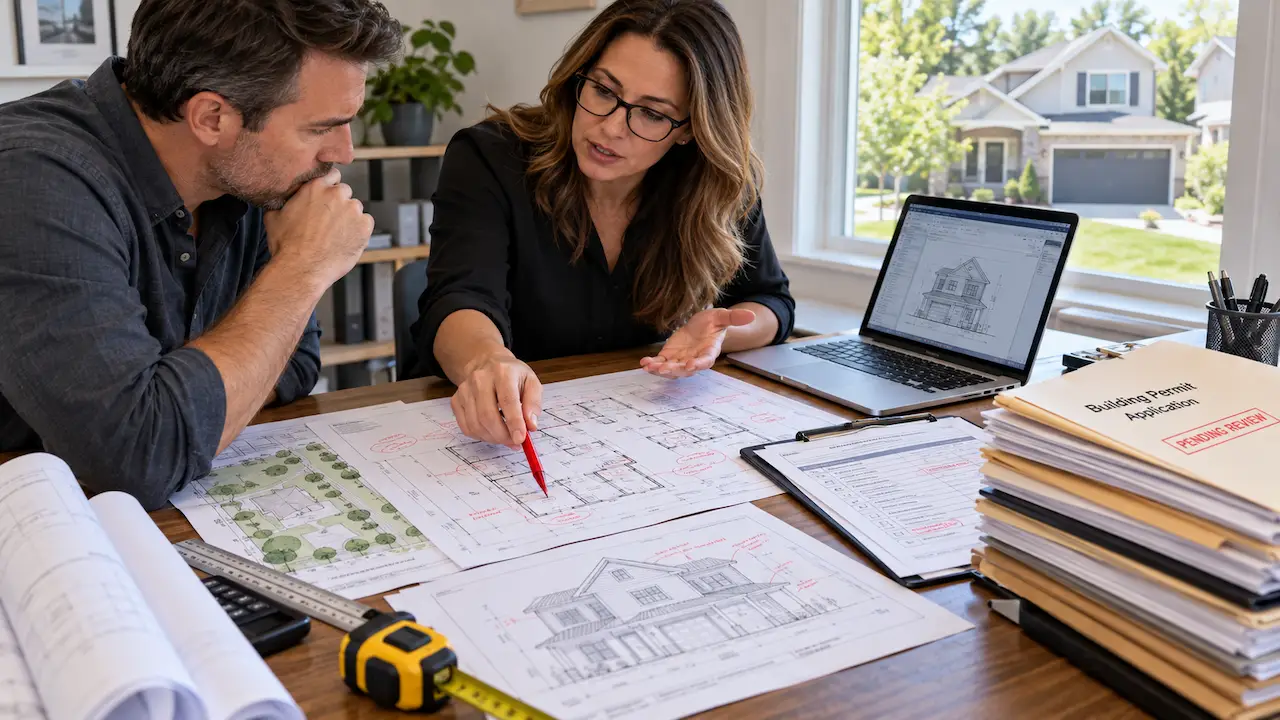
1. Missing or Incomplete Application Documents
Building departments require specific forms and supporting information for different project types. A homeowner may submit construction drawings but forget an owner authorization, contractor license number, project valuation, or required site plan.
These omissions can prevent the application from passing the initial intake review. Before submission, review the applicable building permit site plan requirements and the official jurisdiction checklist.
2. Incorrect Property Information
Permit applications must identify the correct property and proposed work. Inconsistent addresses, parcel numbers, lot dimensions, or project descriptions can create confusion during review.
For example, a site plan showing one proposed deck size while the construction drawings show another may require clarification. Using consistent information across all documents helps reviewers understand the project.
3. Setback and Zoning Problems
Many residential projects must comply with zoning requirements involving building placement, setbacks, lot coverage, height, and permitted uses. A proposed shed or home addition may be physically possible but still conflict with applicable development restrictions.
Reviewing property setbacks and site plan requirements before finalizing the design can reduce the risk of redesign.
4. Unclear or Incomplete Site Plans
A site plan should communicate the property’s existing conditions and the proposed improvements. Missing dimensions, unclear boundaries, unlabeled structures, and inconsistent measurements may lead to correction notices.
A properly prepared drawing helps the reviewer understand where construction will occur and how it relates to the property.
5. Delayed Responses to Reviewer Comments
Permit reviewers sometimes request additional documents or design changes. Problems arise when these comments are overlooked, forwarded to the wrong person, or answered incompletely.
An application may remain on hold even when most requirements have already been satisfied. A clear correction log and timely response process can reduce this type of delay.
6. Multiple Permits or Reviewing Departments
A home renovation may involve separate building, electrical, plumbing, mechanical, zoning, or other approvals. Each application may have its own requirements and review status.
Without organized tracking, homeowners can lose visibility into which approvals remain outstanding.
How Residential Permit Expediting Services Work
A professional expediting process follows the application from initial assessment through the agreed completion stage.
Step 1: Review the Project and Permit Requirements
The process begins with understanding the property, proposed construction, and local permitting authority. We identify the likely permit type, application forms, required drawings, and relevant supporting documents.
If you have already submitted an application, we review its current status and outstanding comments. This initial assessment helps determine whether the problem is missing documentation, an unresolved technical issue, or administrative follow-up.
Step 2: Organize the Application Package
The next step is collecting and reviewing the required documents. These may include site plans, construction drawings, contractor details, owner authorization forms, product information, and professional certifications. We check basic administrative consistency and identify missing items.
Technical documents that require licensed professionals remain the responsibility of those qualified individuals.
Step 3: Coordinate Permit Submission
Depending on the jurisdiction and available authorization, the application may be filed through an online portal, email process, or another approved method. We help coordinate the submission and maintain records of the documents provided.
An organized application package can reduce avoidable intake problems.
Step 4: Monitor the Review Process
After submission, the permit application enters the reviewing authority’s workflow. We track available status updates, outstanding fees, reviewer messages, and requests for additional information.
This helps homeowners understand whether the next action belongs to the building department or their project team.
Step 5: Manage Corrections and Resubmittals
If corrections are issued, we organize the comments and identify who should address each item. For example, a setback correction may require revised site information, while a structural comment may require the design professional’s response.
Revised documents are collected and coordinated for resubmission.
Step 6: Follow Through on Permit Issuance
Once the required reviews are complete, the application may still have outstanding fees, contractor verification, signatures, or other issuance conditions. We help identify those remaining steps and organize the final permit documentation within the agreed service scope.
Which Residential Projects Benefit Most From Permit Expediting?
Some residential projects have straightforward permit requirements. Others involve several documents, reviews, and professionals. The following project types commonly benefit from organized permit coordination.

Home Additions and Garage Conversions
Adding living space or converting an existing garage can affect zoning, structural requirements, parking, utilities, and occupancy conditions. These projects may require updated site plans and multiple construction drawings.
Because several documents must remain consistent, permit coordination can help prevent conflicting information.
Accessory Dwelling Units
ADU projects often involve building placement, lot coverage, setbacks, utilities, access, and other jurisdiction-specific requirements. The review process may include planning and building departments.
Understanding ADU site plan requirements before submission can help identify the necessary documentation.
Deck and Patio Construction
Deck permits may require a site plan showing the proposed footprint, stairs, setbacks, and relationship to the existing house. Structural construction details may also be necessary.
A deck permit site plan supports the property layout portion of the application.
Swimming Pool Installation
Pool permits can involve site layout, barriers, setbacks, equipment placement, drainage, and electrical requirements.
A pool permit site plan can help document the proposed pool location and relevant property features. Additional technical drawings may be required.
Fences, Sheds, and Accessory Structures
Smaller improvements may have simpler application requirements, but setbacks, height limits, easements, and property boundaries still matter. For example, a fence permit site plan may be required to show the proposed fence location and its relationship to property lines.
Permit expediting is most useful for these projects when the application is already delayed, the jurisdiction’s process is unfamiliar, or the homeowner needs help managing corrections.
How to Avoid Residential Permit Delays Before Applying
Preventing delays starts before you upload the first document.
Confirm the Correct Permit Type
Contact your local building or planning department and describe the proposed work. Ask which approvals are required and whether separate trade permits are necessary. Do not assume that the requirements used by another city apply to your property.
Prepare Accurate Property Drawings
The site plan should clearly show existing structures, proposed construction, relevant dimensions, setbacks, and other information requested by the reviewing authority.
For eligible projects, professional residential building permit site plans can help organize this information.
Check Whether a Survey Is Required
Some jurisdictions accept site plans prepared from existing property records. Others require a licensed survey, particularly when boundary accuracy is important.
Before ordering drawings, determine whether a site plan without a new survey is acceptable for your project.
Keep All Drawings Consistent
Check that the site plan, architectural drawings, structural details, and application forms describe the same proposed work. Building dimensions, project addresses, and revision dates should agree.
If one drawing changes, determine whether related documents also need updating.
Respond to Corrections Completely
When the building department issues comments, review the entire notice. Assign each item to the appropriate person and prepare a coordinated response.
Understanding common site plan rejection reasons can help you avoid submitting incomplete revisions.
What Should You Do if Your Residential Permit Is Already Delayed?
First, identify the application’s exact status. A permit marked “under review” is different from one awaiting applicant corrections, unpaid fees, or missing professional documents. Review the permit portal and any correspondence from the agency.
If the department has requested corrections, obtain the complete notice and determine who must address each issue. Next, gather the submitted plans, application number, receipts, and relevant emails. An expediter can use this information to reconstruct the application’s history and identify the next practical action.
However, if the delay results from a required engineering redesign or survey, administrative expediting alone cannot resolve the technical problem. The appropriate professional must complete that work before the application can move forward.
How Much Do Residential Permit Expediting Services Cost?
The cost depends on the permit type, application status, jurisdiction, and amount of coordination required. City Permit Plans offers permit expediting starting at $300, with final pricing determined by the agreed project scope. A straightforward application with complete drawings may require less work than a home addition involving several review departments and repeated corrections.
Government permit fees, professional design services, surveys, engineering calculations, and other third-party expenses are separate unless specifically included in the quote. Review our service pricing and request an estimate based on your current application status.
Is Hiring a Residential Permit Expediter Worth It?
Hiring an expediter can be worthwhile when the cost of ongoing delays or the time needed to manage the application exceeds the service fee. For example, a homeowner coordinating an addition may have to communicate with the contractor, designer, engineer, and building department. Without one person tracking the process, important requests can be overlooked.
An expediter helps maintain a clear record of outstanding items and responsible parties. However, a simple fence or shed application with complete documents may be manageable without professional assistance.
The decision should depend on the complexity of your project, the amount of coordination needed, and whether the application is already experiencing problems.
Can Residential Permit Expediting Guarantee Faster Approval?
Building departments control their review schedules, technical decisions, staffing, and approval procedures. A permit expediter cannot bypass regulations, guarantee approval, or promise that a reviewer will complete an application by a specific date. The value of expediting comes from reducing delays within the applicant’s control.
These include missing forms, incomplete submissions, overlooked messages, uncoordinated corrections, and slow resubmittals. An organized process can make the application easier to manage, but the final approval decision remains with the permitting authority.
Get Residential Permit Expediting Support From City Permit Plans
A delayed building permit can interrupt construction plans, contractor schedules, and home improvement timelines. The most effective response is to identify what is holding the application, organize the required documents, and ensure every outstanding item has a responsible person.
At City Permit Plans, we help homeowners and residential contractors coordinate permit applications, track agency reviews, and manage correction responses. Whether you are preparing a new application or dealing with an existing permit hold, we can help define the administrative support your project needs.
Explore our residential permit expediting services or request a project-specific quote to discuss your property, permit requirements, and current application status.
Frequently Asked Questions
What is residential permit expediting?
Residential permit expediting is administrative assistance with home construction permit applications. It can include document preparation, submission coordination, status tracking, correction management, and issuance follow-through.
How much does a residential permit expediter cost?
City Permit Plans offers expediting services starting at $300. Final pricing depends on the permit type, jurisdiction, application complexity, and required coordination.
Can a permit expediter help with a delayed building permit?
Yes. An expediter can review the application’s current status, organize outstanding requirements, coordinate corrections, and assist with resubmission. Technical problems must still be resolved by qualified professionals.
Does permit expediting guarantee approval?
No. The building department controls permit review and approval. Expediting helps reduce preventable administrative delays but does not override regulations or agency decisions.
Can I hire a permit expediter after submitting my application?
Yes. An expediter may assist with an application already under review when the necessary permit records, correspondence, and authorizations are available.
Do I need a permit expediter for a small home improvement project?
Not always. Simple projects may be manageable directly through the local building department. Expediting becomes more useful when the process involves multiple permits, repeated corrections, or unfamiliar requirements.